Posts

Showing posts with the label Huffing

Sue Scheff: INHALE Intelligence on Inhalants - Be an educated parent

Image
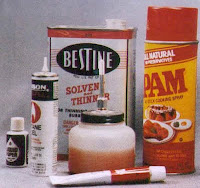
The National Inhalant Prevention Coalition Awareness will help you learn about Inhalant Abuse. As 2010 rolls in shortly, start now in being an educated parent on this very serious issue teens are trying. Did you know: One on five students in America has used an inhalant to get high by the time he or she reaches the eighth grade. Parents don't know that inhalants, cheap, legal and accessible products, are as popular among middle school students as marijuana. Even fewer know the deadly effects the poisons in these products have on the brain and body when they are inhaled or "huffed." It's like playing Russian Roulette. The user can die the 1st, 10th or 100th time a product is misused as an inhalant. - National Inhalant Prevention Coalition Inhalant abuse is a serious concern especially since these products are easily accessible as well as common household products. They're all over your house. They're in your child's school. In fact, you probably pi...
Sue Scheff: Teen Drug Prevention - Inhalant Abuse

Image
Learn more about Inhalant use and your teens Inhalant abuse is a growing problem that many parents are not aware of. We are cautious of drug abuse and alcohol consumption , however huffing, sniffing, dusting, bagging and the use of inhalants is not a frequent discussion. Why is inhalant abuse to important to learn about? Because many of the products teens are using today to get high through inhalants, are located in your home. Many are household items such as nail polish remover, paint thinner, correction fluid, lighters, gasoline and many more. As a Parent Advocate , I am constantly reminding parents that keeping your lines of communication open with your teens can help prevent drug use and other negative behavior that can stem from peer pressure , depression , etc. Here are some talking tips to open your dialogue with your teen today: Source: Inhalant.org • Ask your pre-teen or teenager if he or she knows about Inhalant Abuse or is aware of other kids abusing products. • Reinfor...

Sue Scheff: Inhalant Abuse - Parents Learn More

Image
WHAT IS INHALANT ABUSE? Over a year ago a parent emailed about this serious concern that you need to learn more about. Why? Inhalants can be found in just about everyones home - garage - basement - bathrooms - even your vanities! Yes, nail polish remover can be used as inhalants. Alliance for Consumer Education helps you learn more. The Alliance for Consumer Education (ACE) is a 501(c)(3) nonprofit organization founded in. The ACE mission is “to promote responsible and beneficial use of products to ensure a safer, healthier and cleaner environment in homes, businesses and the community.” Its core program areas are: Inhalant Abuse Prevention, Disease Prevention, Poison Prevention, and Product Management. Source: Inhalant.org Inhalant abuse refers to the deliberate inhalation or sniffing of common products found in homes and communities with the purpose of "getting high." Inhalants are easily accessible, legal, everyday products. When used as intended, these products have a u...

Sue Scheff - Parenting Teens and Inhalant Abuse

Image
As the new year has started, parents need to become more educated and informed about today's teens and the issues they face. Many parents know about substance abuse , and teach our kids to say no to drugs - but do you know about Inhalants ? Ordinary household items that can be lethal to teens looking for a quick and inexpensive high? More importantly, sometimes deadly high. Parent learn more about Inhalant Abuse . Here is a great " talking tips " page from The Alliance for Consumer Education (ACE) - take the time to learn more today. You could save a child's life.

Sue Scheff: Drug Free America Parent Campaign

Image
Parenting today has become more challenging than ever. Social Networking is expanding a new area of concern for parents - and today more than ever, parents need to be informed and keep updated about substance abuse, teen drug use, huffing, drinking, inhalant use and other harmful habits. Peer pressure, the need to fit in - combined with kids suffering with low self esteem can lead to negative behavior. Stay informed - visit http://www.drugfree.org/ to keep yourself educated. Parent Campaign Greater parental involvement in the decisions kids make about drugs is critical to preventing and reducing substance abuse. Our research has shown that kids who report learning a lot about the risks of drugs from their parents are up to half as likely to use drugs as those who don’t. However, only about 3 out of 10 kids report learning a lot about drugs from their parents. Our Parent Campaign is designed to inspire more parents and other family influencers to connect with their kids in ways that p...

Sue Scheff: Addictions and Inhalants

Image
From the Sunshine Coast’s Health Center Blog: Daniel Jordan raises some interesting questions in his summary of an addictions presentation byDr. Carlton Erickson, Ph.D., Professor of Pharmacology, and director of the Addiction Science & Research Center in the College of Pharmacy at the University of Texas at Austin. What are your perspectives or thoughts on his following two points? 1. Inhalants and Addiction:“Dr. Erickson calls the likelihood that a person will become dependent on a drug its “dependence liability.” Some drugs have a dependence liability while others do not.The criteria for dependence liability is how it acts on the mesolimbic dopamine system. Caffeine, antidepressants, and newer anti-seizure medications do not have dependence liability. However, some drugs do and the following chart shows that a certain percentage of people (depending on the drug) will become dependent *: Drug / Percentage of People Who Become DependentNicotine - 32%, Heroin - 23%, Cocaine - 17%, ...

Problem Parents Contribute to Teen Drug Use

Image
Source: LA Times A survey on substance abuse among teens was released this morning that really lowers the boom on parents. The annual survey from the National Center on Addiction and Substance Abuse at Columbia University calls out parents for contributing to drug and alcohol use among kids ages 12 to 17. Some parents fail to monitor their children's activities, do not safeguard medications at home that can be used for abuse, and do not set good examples for their kids, the report said. Almost half of the teens surveyed -- a nationally representative sample of 1,002 teens and 312 of their parents -- said they leave the house to hang out with friends on school nights. Among those teens, half who come home after 10 p.m. said they had been drinking alcohol, smoking marijuana or doing other drugs. Just under 30% of those who come home between 8 and 10 p.m. said they had been drinking or using drugs. In contrast, only 14% of the parents said their teens leave the house to hang out with...

Sue Scheff - Parent Advocate - Parents Need to Learn More About Inhalant Use Among Teens

Image
I know I have Blogged a lot about Inhalant Abuse and I will continue to do so - especially after reading about the recent senseless deaths. Take a moment to read their Blog at http://inhalant-info.blogspot.com/ - Take the time to learn more and you never know when this knowledge will be necessary. http://www.inhalant.org/

Sue Scheff: The Dangers of Inhalant Abuse

Image
By http://www.inhalant.org/ Inhaled chemicals are rapidly absorbed through the lungs into the bloodstream and quickly distributed to the brain and other organs. Within minutes, the user experiences intoxication, with symptoms similar to those produced by drinking alcohol. With Inhalants, however, intoxication lasts only a few minutes, so some users prolong the “high” by continuing to inhale repeatedly. Short-term effects include: headaches, muscle weakness, abdominal pain, severe mood swings and violent behavior, belligerence, slurred speech, numbness and tingling of the hands and feet, nausea, hearing loss, visual disturbances, limb spasms, fatigue, lack of coordination, apathy, impaired judgment, dizziness, lethargy, depressed reflexes, stupor, and loss of consciousness. The Inhalant user will initially feel slightly stimulated and, after successive inhalations, will feel less inhibited and less in control. Hallucinations may occur and the user can lose consciousness. Worse, he or sh...

Sue Scheff: Deliberate Misuse of Inhalers Found in 1/4 of Teens

Image
Parents Universal Resource Experts ( Sue Scheff ):As a parent advocate, I am learning more and more about inhalant abuse and parents need to be aware of this type of way that kids are getting high today and potentially deadly. Read this article and learn more. ********************************* We've had a few questions on the inhalant.org message board in the past months about teens potentially using their asthma medication to get high. One poster's friend had a daughter whose inhaler recently needed to be refilled every week when it normally was only refilled every two or three months. Another's stepson was misusing his asthma medication and "has been eating this pills as if they are M&Ms!" The University of Michigan News Service featured an article about a new study looking at the prevalence of inhaler abuse in teenagers. The study in question was performed by researchers at the U of M using 723 adolescents in thirty-two treatment facilities. The study rep...

Sue Scheff- Parents Universal Resource Experts - Huffing Freon

Image
As a parent advocate ( Sue Scheff ) I think there needs to be more awareness on inhalant use of today's kids. Huffing Freon can be so accessible to kids today - especially since I am in Florida - I think parents need to take time and learn more. www.inhalant.org is a good place to start. Read More.

KYDS Survey of Inhalant Use

Image
A recent news story used the statistics found in the 2006 Prevention Needs Assessment Survey from the KYDS Coalition , sponsored by the Broome County Mental Health Department in Binghamton, New York. The entire survey can be read in the link above, but it is rather long; here are some relevant data points: Percentages of Students using Inhalants (lifetime): 7th grade 2002: 8.7% 2004: 8.1% 2006: 10.8% Monitoring the Future survey: n/a 8th grade 2002: 11.0% 2004: 8.9% 2006: 15.2% Monitoring the Future survey: 17.1% 9th grade 2002: 10.3% 2004: 10.7% 2006: 13.5% Monitoring the Future survey: n/a 10th grade 2002: 7.6% 2004: 10.2% 2006: 14.6% Monitoring the Future survey: 13.1% 11th grade 2002: 7.9% 2004: 11.6% 2006: 13.0% Monitoring the Future survey: n/a 12th grade 2002: 8.4% 2004: 7.6% 2006: 10.5% Monitoring the Future survey: 11.4% Total 2002: 9.0% 2004: 9.6% 2006: 13.0% Monitoring the Future survey: n/a What are the highlights of this data? Well, there is an increase in every single gr...